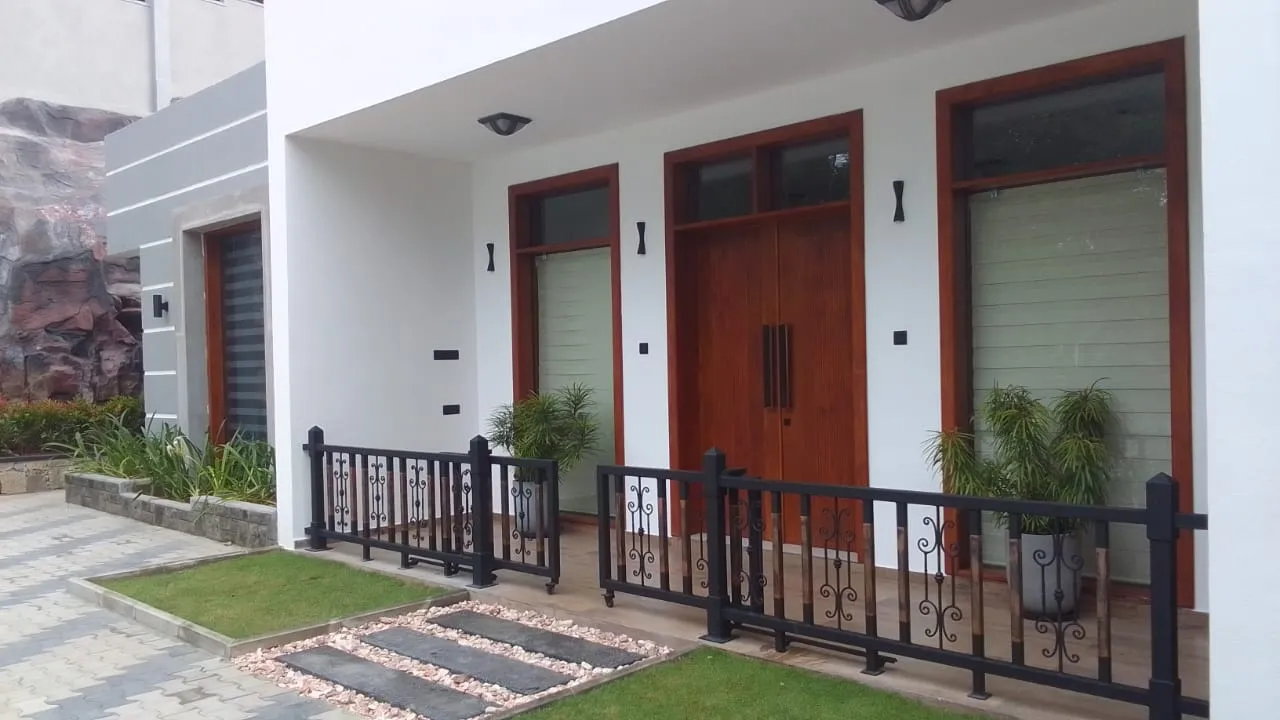
You are thousands of kilometres away — in the Middle East, Europe, Australia, or Canada — and your house is being built back in Sri Lanka. You cannot walk onto the site. You cannot physically check the concrete mix, measure the wall thickness, or inspect the electrical conduits. How do you know the quality is right?
This is the single biggest anxiety for overseas Sri Lankans building at home. You can choose the design, approve the BOQ, and agree the timeline. But quality? That feels like something you just have to hope for.
At Unicon Construction, we do not leave quality to hope. We have built a formal 6-stage quality inspection process that checks every critical element of your home before the next phase begins — and we document every single check with photos, videos, and written reports shared directly with you.
Our Quality Commitment
No defect leaves our site. Every stage is inspected and signed off before work proceeds. Every report is shared with you. If something does not meet standard, we correct it — at our cost, before moving on. This is not a promise. It is our process.
Why Overseas Clients Need a Structured Inspection Process
In Sri Lanka's construction industry, quality issues most often arise not from deliberate dishonesty, but from a lack of systematic checking. A contractor who skips a reinforcement check at the foundation stage, or does not verify wall plumb before plastering, may not even realise the problem exists — until the owner moves in and cracks appear six months later.
For overseas clients who cannot make surprise site visits, this risk is even greater. A structured, documented inspection process is the only reliable protection. It means problems are caught and fixed at the stage where correction is cheapest and easiest — not after the walls are closed and tiles are laid.
Read our guide to common mistakes when building a house in Sri Lanka to understand what typically goes wrong — and how to prevent it.
Unicon's 6-Stage Quality Inspection Process
Every Unicon project follows the same inspection framework, regardless of size or location. Here is exactly what we check at each stage and why it matters.
Stage 1: Foundation Inspection
Before any concrete is poured, we inspect the foundation excavation depth, soil bearing capacity based on soil test results, and reinforcement bar layout. We verify that the rebar size, spacing, and cover distance match the structural engineer's drawings. Photos of the reinforcement cage — before and after concrete pour — are sent to you. This is the most critical stage: a foundation problem cannot be corrected without demolition. Learn more about foundation types for houses in Sri Lanka.
Stage 2: Structural Frame Inspection
Once columns and beams are cast, we check alignment, verticality (plumb), and dimensional accuracy against the approved structural drawings. Lintel levels above door and window openings are verified. We also check that column ties and beam stirrups have been placed at the correct spacing before the concrete is poured. Any column or beam that deviates beyond tolerance is flagged for review before work continues. See the full step-by-step house construction process to understand how these stages fit together.
Stage 3: Roof Slab Inspection
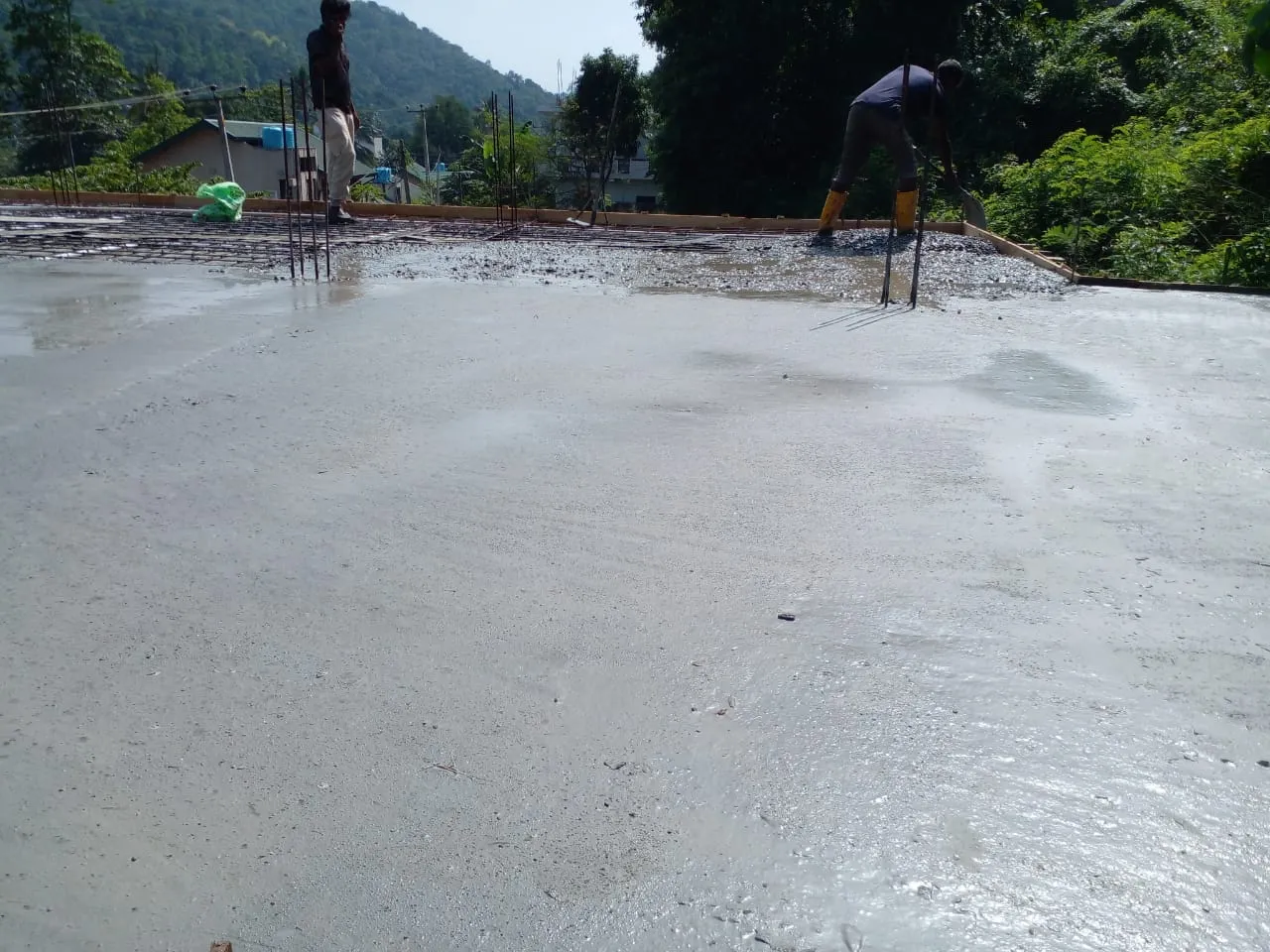
The roof slab inspection is carried out in two parts. First, before the pour, we verify the formwork level, reinforcement layout (top and bottom layers), bar spacing, cover blocks, and the positions of any slab openings. Second, we confirm the concrete grade being batched matches the specification. After casting, the curing process — critical for slab strength — is monitored and documented for a minimum of seven days. Photos of both the reinforcement and the cured slab surface are shared with you.
Stage 4: Masonry and Plastering Check
As brick or block walls are built, we check wall alignment, vertical plumb, and horizontal level at regular intervals using spirit levels and plumb bobs. Before plastering, all surfaces are checked for flatness and any high points are knocked back. Plaster thickness is measured at multiple points per room to ensure consistency. This stage matters because uneven walls and out-of-plumb surfaces create costly problems when tiling or fitting joinery.
Stage 5: MEP Inspection — Before Walls Are Closed
This is a stage many builders skip — and it is where the most expensive problems are created. Before any wall is plastered or ceiling is boarded, our team inspects all mechanical, electrical, and plumbing work. We verify conduit runs and electrical box positions, water supply pipe routing and pressure, drainage pipe falls and trap positions, earthing connections, and switchboard mounting heights. Approving and photographing MEP work before it is hidden behind plaster means there are no guessing games when a fault appears later.
Stage 6: Final Finishing Inspection
The final inspection covers every visible and functional element of the completed home. We check tile laying for level, alignment, and grout consistency; paint finish for uniformity and coverage; door and window fitting for smooth operation and weathertight seals; bathroom and kitchen fittings for secure mounting and leak-free connections; and all electrical points for correct function. A snag list is compiled and every item is resolved before handover. Nothing is carried forward.
How We Document Everything for Overseas Clients
Inspection without documentation is just a verbal promise. Every Unicon quality check is recorded.
| Inspection Stage | What You Receive |
|---|---|
| Foundation | Soil test report + reinforcement photos + post-pour photos |
| Structural Frame | Column and beam alignment photos + measurement records |
| Roof Slab | Pre-pour reinforcement photos + concrete grade records + curing log |
| Masonry and Plastering | Wall plumb check photos + thickness measurements |
| MEP | Conduit and pipe routing photos + pressure test results |
| Final Finishing | Room-by-room photo report + completed snag list |
All reports are delivered via WhatsApp as they are completed — not as a batch at the end of the project. This means you are informed at every milestone, in real time, from wherever you are in the world.
Important: When choosing a builder, ask them specifically what quality checks they carry out and how they document them. If the answer is vague — or they cannot show you sample reports from previous projects — treat that as a serious warning sign. At Unicon, we are happy to show you examples of our stage reports before you commit.
The Final Walkthrough — Room by Room, on Video Call
Before we hand over the keys to any Unicon project, we conduct a formal final walkthrough with the client. For overseas clients, this is done via a live video call — not a recorded video sent after the fact.
Our project coordinator walks through every room of the house with the phone camera, checking each element against the agreed specification:
- All walls and ceilings checked for finish quality and paint uniformity
- Every door and window opened and closed to verify smooth operation and weather sealing
- All tile surfaces inspected for level, alignment, and grout quality
- Kitchen and bathroom fittings checked for secure mounting and correct function
- All electrical sockets, switches, and light points tested live during the call
- External areas — steps, pathways, drains, boundary wall — inspected
You can ask us to look at anything more closely, revisit any area, or check any specific detail. The call is not rushed. We stay on until you are satisfied. Only when you confirm acceptance do we proceed with the formal handover process.
What Happens When a Defect Is Found
Every construction project will encounter minor issues at some stage — a tile not perfectly aligned, a door hinge needing adjustment, a paint touch-up required. The question is not whether issues arise. It is how they are handled.
At Unicon, the answer is simple: every defect found at any inspection stage is corrected before work proceeds. This applies equally during construction and at the final walkthrough.
- During construction — If an inspection reveals a problem, work on that element stops. The issue is documented, a correction plan is agreed, and the remediation is completed and re-inspected before the next phase begins.
- At the final walkthrough — Any snag identified during the video call is added to the handover snag list. We schedule the repairs, complete them, and send you photographic confirmation before the handover is officially closed.
- No compromise on handover — We do not hand over a property with outstanding defects. If the snag list is not cleared, handover does not happen. This is a firm position, not a negotiating point.
Be aware: Many builders in Sri Lanka consider a "snagging list" to be something addressed after the client moves in — sometimes over months or years. This is a common source of disputes. At Unicon, all snags are cleared before keys are handed over. Make sure any builder you consider has the same policy in writing.
How This Fits into Our Full Overseas Client Process
Our quality inspection process does not operate in isolation — it is one layer of a complete system designed to protect overseas clients throughout the entire project. That system also includes detailed written contracts, 3D design approval before construction, milestone-based payment schedules, and a dedicated project coordinator as your single point of contact.
To understand the full picture of how we manage projects for Sri Lankans living abroad, read our complete guide to building a house in Sri Lanka from abroad and visit our overseas clients page.
You can also learn about how we approach trust and accountability in our article on why Sri Lankans abroad choose Unicon Construction.
Share This Article
Frequently Asked Questions
How many quality inspection stages does Unicon carry out during construction?
Unicon conducts six formal quality inspection stages: foundation, structural frame, roof slab, masonry and plastering, MEP (electrical, plumbing, drainage), and final finishing. Each stage is documented with photographs and a written report shared with the client before work proceeds to the next phase.
How will I know quality is being maintained if I am living abroad?
At every inspection stage, our team documents the work with detailed photos and videos and sends them to you via WhatsApp. You will receive a stage-completion report before we proceed. For the final handover, we conduct a room-by-room live video call walkthrough so you can inspect every detail remotely.
What happens if a defect is discovered during an inspection?
All defects found during any inspection stage are corrected immediately before work proceeds to the next phase. We do not hand over a property that has outstanding defects. If a snag is identified during the final walkthrough, it is fixed and re-inspected before keys are handed over — no exceptions.
What is checked during the MEP inspection?
The MEP inspection covers all mechanical, electrical, and plumbing work before walls are closed. This includes verifying conduit runs, socket and switch positions, water supply pipe routing, drainage fall and trap positions, and earthing connections. Checking these before plastering prevents costly rectification work later.
Do I need to be present in Sri Lanka for the final handover?
No. We conduct the final handover inspection via a live video call, going room by room and checking every finish, fitting, door, window, tile, and paint surface against the agreed specification. If you are satisfied, we proceed with handover and key delivery. If any snag is noted, we fix it before closing the handover.
Want to Know More About Our Inspection Process?
Talk to us today — we will walk you through exactly how we protect your build quality from foundation to finishing.
Chat With Us on WhatsApp