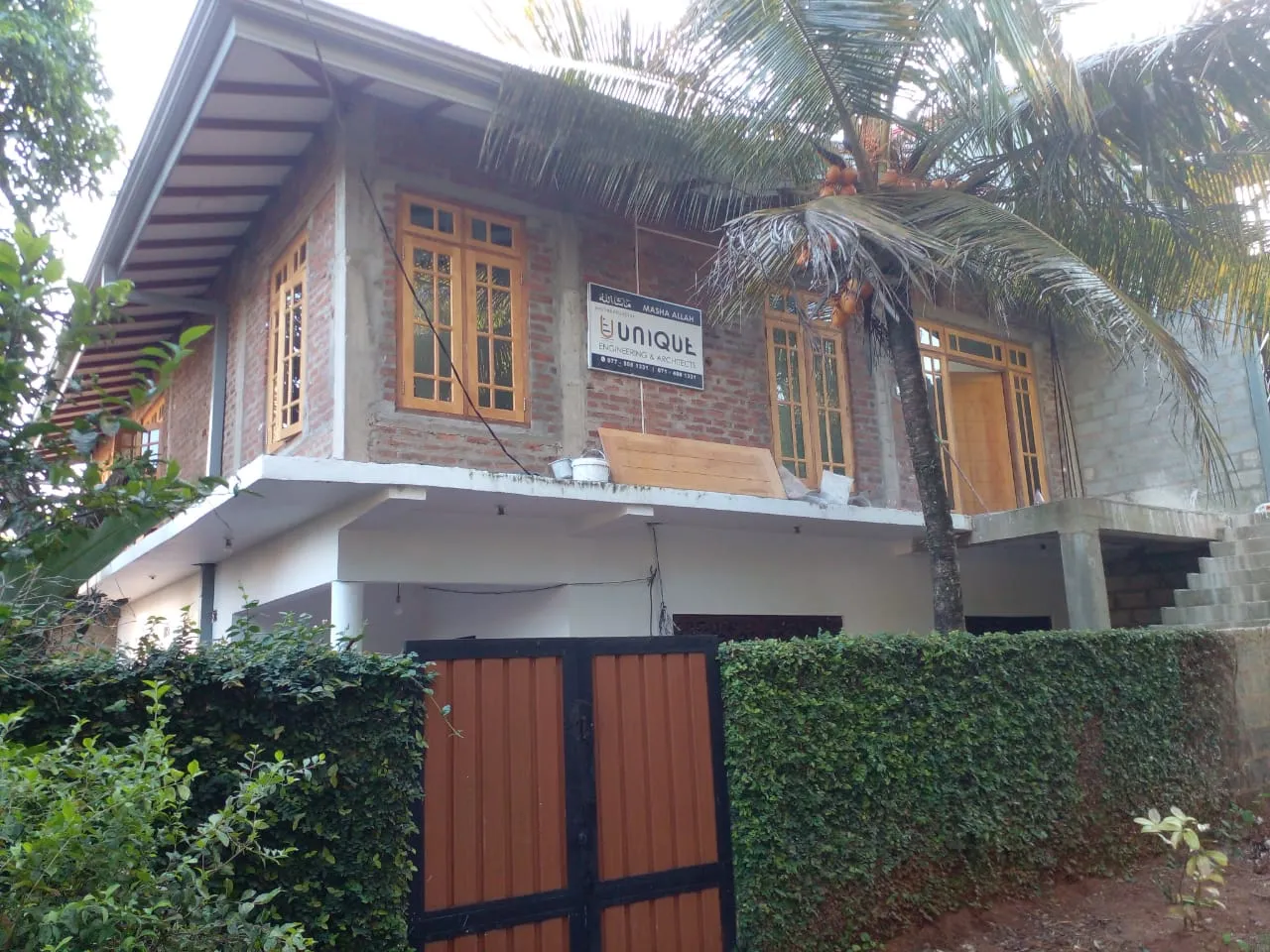
Building a house is the biggest investment most Sri Lankan families will ever make. Yet every year, thousands of homeowners make avoidable mistakes that cost them lakhs of rupees, add months of delays, and sometimes result in a house they are not happy with.
After completing dozens of house construction projects across Matale, Kandy, Kurunegala and Dambulla, we have seen the same mistakes repeated again and again. This guide covers the 12 most common mistakes when building a house in Sri Lanka and exactly how to avoid each one.
Mistake #1: Starting Without a Proper Budget and BOQ
Most CommonThis is the number one reason houses remain unfinished across Sri Lanka. Many homeowners start building with a rough idea of costs but no detailed budget. They run out of money at the roof slab stage or during finishing work, and the project sits incomplete for years.
How to avoid it: Get a detailed Bill of Quantities (BOQ) before you start. A proper BOQ lists every material, quantity, and labour cost for the entire project. It shows you exactly how much money you need from foundation to handover. Always add a 15-20% contingency buffer for unexpected costs.
Use our construction cost calculator to get a rough estimate, then request a detailed BOQ from your contractor.
Mistake #2: Skipping the Soil Test
Costly to Fix LaterMany homeowners assume all soil is the same. They skip the soil test to save Rs. 15,000-30,000 and end up paying lakhs to fix foundation problems later. Sri Lanka has varied soil conditions -- clay soil in Matale behaves very differently from sandy soil in coastal areas or rocky ground in Kandy.
How to avoid it: Always get a soil test done before designing the foundation. The test tells your engineer whether you need a strip foundation, raft foundation, or pile foundation. It also reveals the water table level and soil bearing capacity. This small investment prevents major structural problems.
Mistake #3: Building Without Approved Plans
IllegalSome homeowners start construction before getting building plan approval from their Pradeshiya Sabha or Municipal Council. This is illegal in Sri Lanka. If caught, you face stop-work orders, fines, and in worst cases, demolition orders. You also cannot get a Certificate of Conformity, which means you cannot legally sell or mortgage the house.
How to avoid it: Submit your building plans and wait for approval before starting any construction work. The approval process takes 2-8 weeks depending on your local authority. Read our complete guide to building plan approval for step-by-step instructions.
Mistake #4: Hiring the Cheapest Contractor
False EconomyThe cheapest quote is almost never the best value. Some contractors give low quotes by using poor quality materials, underpaying workers (who then do poor quality work), or leaving out items from the BOQ that they charge extra for later. By the time you add up all the "extras", the cheapest contractor ends up being the most expensive.
How to avoid it: Compare at least 3 detailed BOQ quotes from different contractors. Make sure each quote covers the same scope of work. Visit completed projects by each contractor. Ask past clients about their experience -- did the contractor finish on time? Were there unexpected charges? Was the quality good?
Mistake #5: Not Getting a Written Contract
Legal RiskVerbal agreements are the root cause of most disputes between homeowners and contractors in Sri Lanka. Without a written contract, you have no legal protection if the contractor abandons the project, uses inferior materials, or demands more money than agreed.
How to avoid it: Always sign a written contract that includes:
- Total project cost and payment schedule (tied to milestones, not dates)
- Detailed scope of work (what is included and what is not)
- Start date and expected completion date with penalty clauses for delays
- Material specifications (brands, grades, and quantities)
- Warranty period for defects after handover
- Clear process for handling changes and additional work
Mistake #6: Making Design Changes During Construction
Budget KillerChanging the window position, adding an extra room, or moving a bathroom after construction has started is extremely expensive. It means demolishing work already done, wasting materials, and delaying the project. Every change during construction costs 3-5 times more than if it was planned from the start.
How to avoid it: Finalise your house design completely before construction begins. Get a 3D house design so you can visualise every room, window, and door placement. Walk through the design with your family and make all changes on paper -- not on site. Once construction starts, stick to the approved plan.
Mistake #7: Ignoring Waterproofing
Hidden DamageWaterproofing is invisible once the house is finished, so many homeowners skip it to save money. This is one of the most expensive mistakes you can make. Without proper waterproofing, water seeps through bathroom floors into bedrooms below, monsoon rain penetrates walls, and flat roofs leak within the first year.
How to avoid it: Budget for proper waterproofing in these critical areas:
- Bathrooms: Liquid membrane on floor and walls up to 6 inches before tiling
- Roof slab: Waterproofing membrane on the entire flat roof area
- External walls: Water-resistant plaster and proper drip mouldings
- Foundation: Damp proof course (DPC) at plinth level
Read our bathroom design guide for detailed waterproofing advice.
Mistake #8: Poor Electrical and Plumbing Planning
Expensive to FixElectrical switch positions, socket locations, and plumbing pipe routes are decided during the rough work stage. If you do not plan these properly, you end up with sockets behind furniture, not enough plug points in the kitchen, or hot water pipes running too far from the heater. Changing these after plastering and tiling means breaking walls -- a messy and costly process.
How to avoid it: Plan your electrical and plumbing layout room by room before the rough work stage. Consider:
- Where will each piece of furniture go? Place sockets and switches accordingly
- How many appliances will you use in the kitchen? Plan enough power points
- Where will the washing machine go? Ensure water supply and drainage are nearby
- Plan TV points, internet cable routes, and CCTV wiring during construction, not after
Mistake #9: Using Poor Quality Materials to Save Money
Short-Term Saving, Long-Term CostBuying the cheapest cement, low-grade steel, or thin roofing sheets saves money today but creates problems within 5-10 years. Cracks appear, steel corrodes, roofs leak, and paint peels off. The cost of repairing these problems far exceeds the amount you saved on cheap materials.
How to avoid it: Never compromise on structural materials -- cement, steel reinforcement, sand, and aggregate. Use SLS-certified products. For finishing materials like tiles, paint, and fittings, you can find good quality local brands at reasonable prices. For example, Rocell and Lanka Tiles offer excellent quality at lower prices than imported brands.
Check our 2026 cost guide for current material price ranges.
Mistake #10: Not Supervising the Construction Regularly
Quality RiskSome homeowners visit the construction site once a week or less. By the time they notice a problem -- wrong column position, poor concrete mixing, steel bars placed incorrectly -- it is too late or too expensive to fix. Construction quality drops when there is no regular supervision.
How to avoid it: Visit the site at least every other day during critical stages (foundation, columns, roof slab). If you cannot visit regularly, hire a supervising engineer or work with a contractor who provides regular photo and video updates. At Unicon, we send daily progress photos and videos to every client via WhatsApp.
Mistake #11: Ignoring Ventilation and Natural Light
Comfort IssueSri Lanka has a tropical climate with high humidity. A house without proper ventilation becomes hot, stuffy, and prone to mold growth. Some homeowners focus on the exterior look and forget that windows, air circulation, and natural light are what make a house livable. Small bathrooms without windows develop mold within months.
How to avoid it: Design for cross-ventilation in every room -- windows on opposite walls allow air to flow through. Place windows to capture the prevailing breeze direction. Ensure every bathroom has either a window or an exhaust fan. Use high-level ventilation openings in the kitchen. A good house design balances aesthetics with air flow and natural light.
Mistake #12: Not Planning for the Future
Think AheadMany homeowners build for today without thinking about tomorrow. They build a single-storey house on a foundation that cannot support a second floor later. They do not plan for an ageing parent who may need a ground-floor bedroom. They skip provisions for solar panels, rainwater harvesting, or a home office.
How to avoid it: Even if you are building a single-storey house now, design the foundation and columns to support a future second floor. Leave stub columns and reinforcement bars ready for vertical extension. Plan extra conduit pipes in the walls for future wiring. Consider your family's needs for the next 10-20 years, not just today.
Summary: Your House Building Checklist
Before you start building, make sure you have ticked off these items:
- Detailed BOQ and budget with 15-20% contingency
- Soil test completed and foundation designed accordingly
- Building plans approved by your local authority
- At least 3 contractor quotes compared in detail
- Written contract signed with clear terms
- 3D design finalised -- no more changes after construction starts
- Waterproofing included in the budget for bathrooms, roof, and foundation
- Electrical and plumbing layout planned room by room
- Quality materials specified in the BOQ -- no substitutions without approval
- Supervision plan in place for critical construction stages
- Ventilation and natural light considered in the design
- Future expansion possibilities designed into the structure
Read our step-by-step construction guide to understand the full building process from start to finish.
Frequently Asked Questions
What is the biggest mistake people make when building a house in Sri Lanka?
How can I avoid going over budget when building a house?
Should I hire a contractor or build with daily-paid workers?
Is a soil test necessary before building a house in Sri Lanka?
How do I choose a reliable contractor in Sri Lanka?
Share This Article
Build Your House the Right Way
Get a free consultation and detailed BOQ from our experienced team
Get Free Consultation