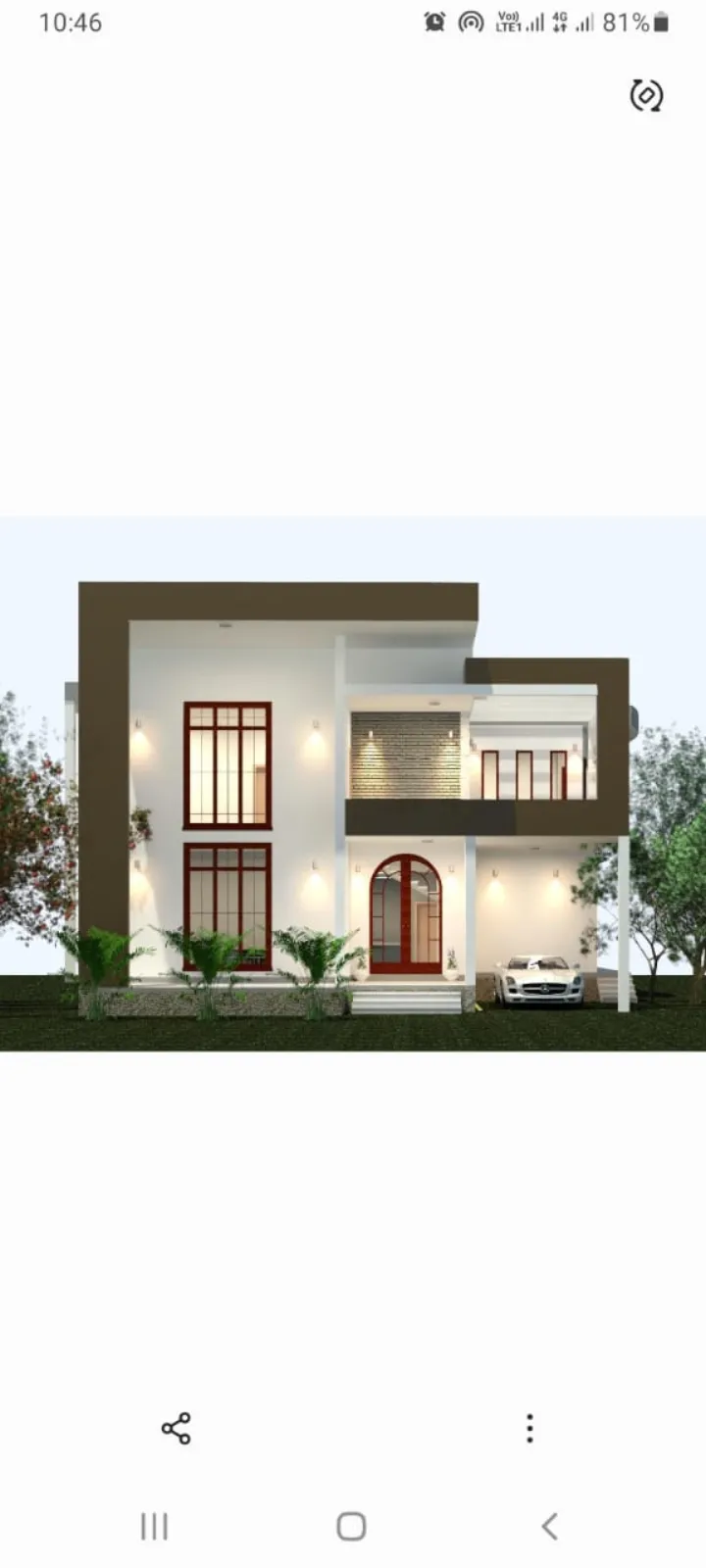
Building Your Dream Home in Colombo, Sri Lanka
Colombo is the commercial capital and largest city in Sri Lanka, with the highest demand for residential construction anywhere on the island. The greater Colombo area is home to over 5 million people, and new housing developments continue to expand into the suburbs as families seek modern, well-designed homes close to employment, schools, and healthcare facilities. For anyone looking to build a house in Sri Lanka, Colombo and its surrounding districts offer unmatched access to infrastructure and amenities.
The suburbs of Colombo have seen explosive residential growth over the past decade. Areas like Maharagama, Nugegoda, Kaduwela, Piliyandala, and Homagama are attracting new homeowners who want the convenience of Colombo without the congestion and sky-high land prices of the inner city. With the Southern Expressway, Outer Circular Expressway, and improved public transport connecting these suburbs to the city centre, commuting has become easier than ever.
However, building a house in Colombo comes with unique challenges that differ significantly from construction in rural or semi-urban areas. Small plot sizes, strict UDA regulations, higher labour costs, and traffic-related logistics all require careful planning and an experienced contractor who understands the Colombo construction landscape. This guide covers everything you need to know about building a home in Colombo and the surrounding areas.
Why Build in the Colombo District
There are several compelling reasons why families choose to build their homes in the Colombo District:
- Employment and business hub: Colombo generates the largest share of Sri Lanka's GDP. Most corporate offices, IT companies, banks, and government institutions are headquartered here, making it the ideal location for working professionals and business owners.
- Best infrastructure: Colombo has the most developed road network in the country, including expressway access to Galle, Katunayake, and Kandy. Public transport, including bus and planned light rail systems, makes commuting practical from suburbs like Kaduwela and Maharagama.
- Top schools and hospitals: The district is home to leading schools such as Royal College, Visakha Vidyalaya, Ananda College, and Ladies' College, along with top hospitals including National Hospital Colombo, Lanka Hospitals, and Nawaloka Hospital.
- Property values consistently appreciate: Land and property values in Colombo have shown strong and consistent appreciation over the decades, making a house here both a home and a solid investment.
- Access to all services and amenities: Shopping malls, supermarkets, restaurants, entertainment, banks, and every service you need are readily available throughout the Colombo District.
Construction Challenges Unique to Colombo
While Colombo is an excellent place to build a home, you need to be aware of the specific challenges that come with construction in the commercial capital:
Small Plot Sizes
Most residential plots in Colombo and its suburbs are between 6 and 10 perches. This is significantly smaller than what you would find in places like Matale or Kurunegala. Building on a small plot requires vertical construction (two or three storeys), careful setback planning, and creative use of space. Boundary wall considerations and party wall agreements with neighbours become important factors in the design process.
Strict UDA Regulations
The Urban Development Authority enforces strict building regulations across most of the Colombo District. These include height limits based on road width, mandatory setbacks from boundaries and roads, road reservation requirements (the RDA or UDA may claim a portion of your land for future road widening), and comprehensive drainage requirements. Non-compliance can result in demolition orders, so getting proper approvals before starting construction is essential.
Higher Labour Costs
Skilled tradesmen in Colombo — masons, carpenters, electricians, plumbers — typically charge 10-20% more than their counterparts in the Central Province. The higher cost of living in Colombo drives these rates up. Additionally, finding reliable skilled labour can be competitive, as there are many ongoing construction projects in the area.
Traffic and Logistics
Material delivery in Colombo is complicated by heavy traffic, narrow residential roads, and restricted delivery hours in certain areas. Concrete trucks, sand lorries, and steel deliveries need to be carefully timed, often requiring early morning or weekend scheduling. This can add to project timelines and costs compared to construction in less congested areas.
Neighbouring Structures
With houses built close together in Colombo's residential neighbourhoods, foundation work must be done carefully to avoid affecting neighbouring structures. Pile foundations or deep strip foundations may be required in areas with weak soil or close proximity to adjacent buildings. Party wall considerations and temporary shoring during excavation add complexity to the construction process.
Higher Overall Costs
While some materials may be slightly cheaper in Colombo due to lower transport distances from ports and factories, the overall cost of construction is approximately 5-10% higher than in areas like Matale or Kurunegala. This is driven by the combination of higher labour costs, logistics challenges, and more complex regulatory requirements.
House Construction Costs in Colombo (2026)
Construction costs in Colombo are among the highest in Sri Lanka due to the factors mentioned above. Here is the current cost per square foot breakdown:
| Finish Level | Cost Per Sqft (2026) |
|---|---|
| Basic Finish | Rs. 7,000 - 9,000 |
| Mid-Range Finish | Rs. 10,000 - 15,000 |
| Luxury Finish | Rs. 16,000 - 25,000+ |
These figures include labour, materials, and standard site preparation. For plots requiring pile foundations or extensive retaining walls, add 10-20% to the foundation budget.
Estimated Total Cost by House Size
| House Size | Basic Finish | Mid-Range Finish | Luxury Finish |
|---|---|---|---|
| 800 sqft | Rs. 56-72 Lakhs | Rs. 80 Lakhs - 1.2 Cr | Rs. 1.28 - 2.0 Cr |
| 1,200 sqft | Rs. 84 Lakhs - 1.08 Cr | Rs. 1.2 - 1.8 Cr | Rs. 1.92 - 3.0 Cr |
| 1,500 sqft | Rs. 1.05 - 1.35 Cr | Rs. 1.5 - 2.25 Cr | Rs. 2.4 - 3.75 Cr |
| 2,000 sqft | Rs. 1.4 - 1.8 Cr | Rs. 2.0 - 3.0 Cr | Rs. 3.2 - 5.0 Cr |
| 3,000 sqft | Rs. 2.1 - 2.7 Cr | Rs. 3.0 - 4.5 Cr | Rs. 4.8 - 7.5 Cr |
For a detailed national comparison and breakdown by work category, read our complete 2026 house building cost guide.
Building Permits and Approvals in Colombo
Obtaining building permits in Colombo can be more involved than in other parts of the country due to overlapping jurisdictions. Here is what you need to know:
Colombo Municipal Council (CMC) Area
- All construction within Colombo 1-15 requires a building permit from the Colombo Municipal Council
- The Urban Development Authority (UDA) has overlapping jurisdiction and enforces additional guidelines on building height, setbacks, plot coverage, and drainage
- You need an approved building plan prepared by a chartered architect or licensed engineer
- Processing time is typically 8-12 weeks, longer than most other cities due to the volume of applications and detailed UDA review
Suburban Municipal and Urban Councils
- Dehiwala-Mount Lavinia Municipal Council — covers Dehiwala, Mt Lavinia, Ratmalana
- Sri Jayawardenepura Kotte Municipal Council — covers Kotte, Rajagiriya, Nawala, Battaramulla
- Kaduwela Municipal Council — covers Kaduwela, Malabe, Athurugiriya
- Maharagama Urban Council — covers Maharagama, Boralesgamuwa
- UDA regulations still apply in most of these areas
- Processing is generally faster than CMC, taking 6-8 weeks
Outer Suburban Pradeshiya Sabha Areas
- For areas like Homagama, Padukka, and parts of Piliyandala, permits are issued by the respective Pradeshiya Sabha
- UDA regulations may still apply if the area falls within a declared Urban Development Area
- Processing is generally faster, taking 4-6 weeks
At Unicon Construction, we handle the entire permit process for our clients, from preparing building plans to submitting applications and following up with the local authority until approval is granted.
Areas We Serve Around Colombo
Unicon Construction serves the entire Colombo District and surrounding areas. Here are the key areas we cover:
- Colombo City: Colombo 1-15, including Fort, Pettah, Borella, Bambalapitiya, Wellawatte, Kolpetty, and Dematagoda
- Nugegoda & Maharagama: Popular residential suburbs with excellent schools and shopping facilities
- Kaduwela & Malabe: Fast-growing suburbs with new housing developments, close to the IT corridor
- Piliyandala & Homagama: Affordable suburban areas with larger plots and growing infrastructure
- Dehiwala & Mount Lavinia: Established coastal suburbs with a mix of older and newer developments
- Kotte, Rajagiriya & Nawala: Administrative capital area with strong demand for modern homes
- Boralesgamuwa & Battaramulla: Central suburban locations with good connectivity
- Kelaniya, Wattala & Ja-Ela: Northern suburbs along the Colombo-Negombo corridor
- Padukka: Outer suburb with affordable land and quieter surroundings
Our Construction Services in Colombo
3D House Design
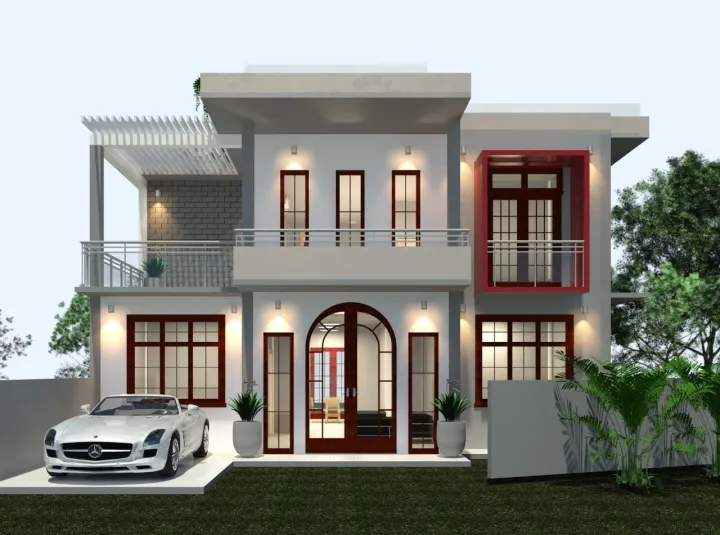
Visualise your Colombo home before construction begins with detailed 3D renderings and floor plans optimised for small urban plots
Full Construction
Complete house building from foundation to finishing, managed by experienced engineers who understand Colombo's urban construction challenges
BOQ & Estimation
Accurate Bill of Quantities and cost estimates that account for Colombo-specific factors like higher labour rates and logistics costs
Interior Finishing
Kitchen designs, bathroom fittings, floor tiling, painting, and complete interior work to move-in ready standard
Tips for Building Successfully in Colombo
1. Maximise Space on Small Plots
With most Colombo plots being 6-10 perches, going vertical is the smart approach. Two or three-storey designs with setback-compliant footprints can give you 1,500-2,500 sqft of living space even on a small plot. Consider flat roofs that can serve as usable terraces, and open-plan ground floors that maximise the feeling of space. Our guide to house plan layouts for small plots covers design strategies in detail.
2. Check Road Reservations Before Buying Land
The Road Development Authority (RDA) and UDA can acquire portions of your land for future road widening. Many roads in Colombo have planned widenings that can reduce your buildable area by 1-3 metres from the front boundary. Always obtain a road line certificate from the RDA before finalising a land purchase in Colombo.
3. Get Proper Drainage Plans
Colombo is flood-prone in certain low-lying areas, particularly in Wellampitiya, Kolonnawa, parts of Kaduwela, and Battaramulla. Proper drainage planning — including soak pits, storm water drains, and raised foundations — is essential. Check the flood history of any plot before purchasing, especially if it is near canals or in reclaimed wetland areas.
4. Plan for Party Walls and Neighbour Considerations
In densely built Colombo neighbourhoods, your construction will inevitably affect neighbouring properties through noise, dust, vibration, and potential structural impact. Communicate with neighbours before starting work, ensure your contractor uses proper shoring during excavation, and consider party wall agreements where boundary walls are shared. This prevents disputes and potential legal issues.
5. Get a Detailed BOQ
A detailed Bill of Quantities is especially important in Colombo where costs can vary significantly depending on location, access, and site conditions. A BOQ prepared by an experienced quantity surveyor will cover every aspect of your build including site clearance, foundation type, structural elements, finishes, and external works. Unicon provides free BOQ estimates for all our Colombo clients, ensuring complete transparency with no hidden costs.
Frequently Asked Questions About House Construction in Colombo
How much does it cost to build a house in Colombo in 2026?
House construction costs in Colombo range from Rs. 7,000-9,000 per sqft for basic finishes, Rs. 10,000-15,000 for mid-range, and Rs. 16,000-25,000+ for luxury builds. Colombo costs are 5-10% higher than the national average due to higher labour rates, logistics challenges, and stricter UDA regulations. A 1,500 sqft mid-range home typically costs between Rs. 1.5 Crore and Rs. 2.25 Crore.
Do I need UDA approval for construction in Colombo?
Yes. Most of the Colombo District falls under UDA jurisdiction. Building permits in Colombo city (Colombo 1-15) are issued by the Colombo Municipal Council with UDA oversight. Suburban areas require permits from their respective Municipal or Urban Councils (Dehiwala-Mt Lavinia MC, Sri Jayawardenepura Kotte MC, Kaduwela MC, Maharagama UC). UDA approval covers height limits, setbacks, road reservations, and drainage requirements.
Can I build a two-storey house on a 6-perch plot in Colombo?
Yes, it is possible to build a two-storey house on a 6-perch plot in Colombo, but you must comply with setback requirements (typically 1.5m from side boundaries and 3m from the road). This leaves a buildable footprint of around 600-800 sqft per floor. Vertical construction is common on small Colombo plots. An experienced architect can maximise your space while meeting all UDA and council regulations.
Which areas around Colombo does Unicon serve?
Unicon Construction serves the entire Colombo District including Colombo city (Colombo 1-15), Nugegoda, Maharagama, Boralesgamuwa, Kaduwela, Malabe, Battaramulla, Piliyandala, Homagama, Padukka, Dehiwala, Mount Lavinia, Kotte, Rajagiriya, Nawala, Kelaniya, Wattala, and Ja-Ela.
Is it cheaper to build in Colombo suburbs than in the city?
Yes, building in Colombo suburbs like Homagama, Padukka, and Piliyandala is generally 5-10% cheaper than building within Colombo city limits. Labour costs are slightly lower, plots are larger (reducing the need for expensive vertical construction), and permit processing is faster through suburban councils compared to the CMC. Material costs remain similar since most suppliers are based in the greater Colombo area.
How do I find a reliable building contractor in Colombo?
Look for contractors registered with CIDA (Construction Industry Development Authority) who have completed projects in the Colombo area. Request detailed BOQ estimates, check Google reviews and social media for real project photos, and visit completed homes. Avoid contractors who refuse to provide written contracts or request large upfront payments. Unicon Construction offers free consultations and site visits for all Colombo clients.
What are the best materials for construction in Colombo?
For Colombo's hot and humid climate, use cement blocks or burnt bricks with proper waterproofing. Flat concrete roofs are popular for multi-storey homes and can serve as usable terraces. Heat-reflective paint and insulated roofing reduce cooling costs. For coastal areas like Mount Lavinia and Dehiwala, use marine-grade materials and extra corrosion protection for steel reinforcement.
How long does it take to build a house in Colombo?
A single-storey house (1,000-1,200 sqft) in Colombo typically takes 5-7 months to complete. A two-storey house (1,500-2,000 sqft) takes 8-12 months. Colombo builds can take slightly longer than other areas due to UDA inspections, limited site access in densely built neighbourhoods, and traffic restrictions on material deliveries. Planning approvals alone can take 4-8 weeks depending on the council.
We Also Serve
Helpful Guides for Your Project
Ready to Build Your Home in Colombo?
Get a free BOQ estimate and 3D house design consultation from our team
Get Free Consultation